The River That Finds the Sea
When Love Finds Its Way
Dear friends,
In this message, we will consider the turning that occurs when love finds its way Home.
But before we go any further, let us pause. When we love, where does our love go? Does it wander wherever it is drawn, or is it quietly going somewhere? And when we say ‘Home’, what do we mean? Is it a place we once left behind or a place still waiting for us? Let these questions rest in your heart. There is no need to answer them. Simply feel which way they point.
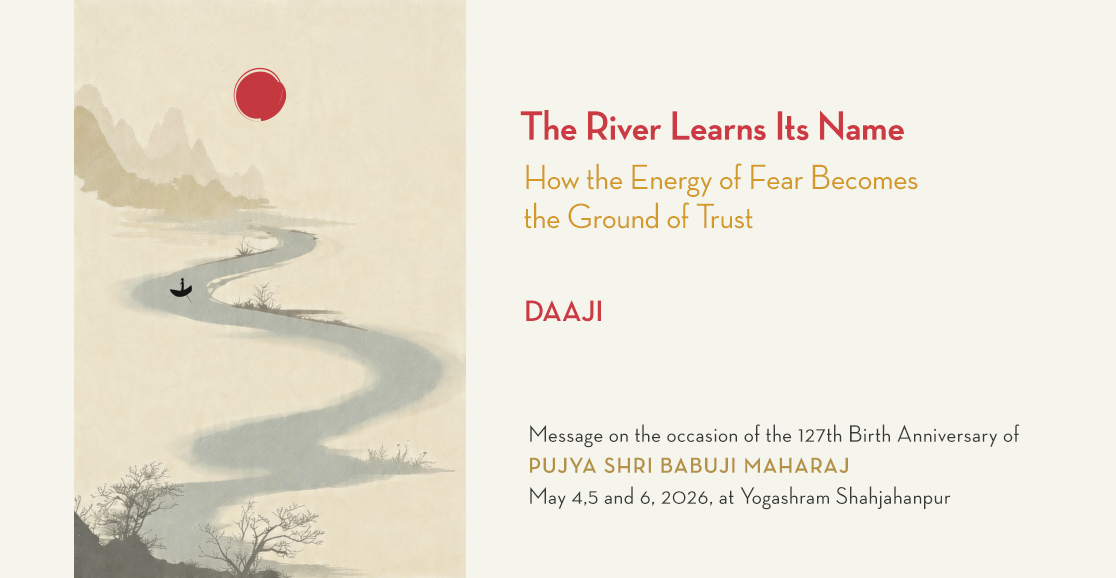
To help us with this turning, we will use the image of a river flowing towards the sea.
A river in flood flows in every direction at once. It has great energy but no direction. The water covers the ground, fills the hollows and overwhelms whatever is before it. When it recedes there is only mud. But that same water, when channelled, cuts canyons, spins turbines and carries ships to the sea. The water is the same. Its energy is the same. What has changed is that it finds a direction.
That is the difference between a heart that loves all around and a heart that has found its way Home in love.
The turning point
In the last message, we saw love blossom in the heart like the fragrance of a flower. It was not a choice but an overflow. The cup was filled by Grace and love overflowed. But that is not the end of the story. When love shines out in every direction, it is like a river in flood. It embraces everything and excludes nothing. In its generosity it can go on forever, without ever reaching the one place it was always meant to reach.
Then, something changes. The love that has been pouring out everywhere starts to turn. It is like a compass needle that has been spinning freely and suddenly finds north. It begins to miss the place it came from, the presence that filled the cup in the first place. This turning is not a lessening of love; it is the deepening of love. The river has not lost its water; it has found its banks. And those banks will take it to the sea.
The ancient sage Narada describes this turning in the simplest language:
Sa tvasmin parama prema rupa.
Devotion is the supreme love directed towards God.
Sage Narada does not speak of just any love, not even an extraordinary love. He speaks of the love of all loves, parama prema, the utmost intensity of the heart gathered into a single direction. This is bhakti.
Babuji also describes bhakti in his aphorism, ‘Love Him who loves all.’
To Babuji’s words, Chariji adds the natural companion, ‘Love all whom He loves.’ The river that has found its course does not stop giving. All the fields along its banks remain nourished and green.
The craving that puts all cravings to rest
In the first message of this journey, ‘The Divided Heart’, we saw desire pulling the seeker in two directions at once. One wolf tugged towards the familiar, the other towards the luminous. The heart was torn. It wanted both and could not choose. That division was the first barrier we identified, and we traced its source to fear.
In this eleventh message of the series, we now see desire from the other side. Bhakti is not the absence of desire. It is the unification of desire. All the scattered longings, broken wants and restless cravings that sent the heart flying in every direction at once, now come together in one current. They flow towards one destination. The heart is no longer divided. It has not stopped wanting. It has at last found the one thing worth wanting wholly.
Babuji makes a distinction that throws light on this. He says that true bhakti is free of the physical desires of the senses. It is moved by real longing which, when satisfied, does not create more longing in its place. It ends all longings.
Let us consider what that means. Every worldly desire, once gratified, breeds another. We want a promotion; a few weeks after we get it we want the next one. We want a house; the day we buy it we are dreaming of a bigger one. Fulfilment breeds the next need and the cycle never stops. Bhakti is the only craving that, when fulfilled, does not open another door. It dissolves the need for doors altogether.
Narada goes a step further. He tells us that bhakti is not desire at all, for it ends in stillness. Babuji shows us how both can be true: bhakti begins as a craving and finishes as the end of craving.
I once asked someone, ‘What did you want the most when you were seven years old?’
He paused for a moment and said, ‘A red bicycle. I remember crying because we couldn’t afford it.’
‘And now?’ I asked.
He chuckled, ‘Now I have three cars. I don’t even remember when I stopped wanting that bicycle.’
He didn’t fight the desire, he simply outgrew it. A bigger want took its place. This is how the world cures desire, by replacing it with something more. Bhakti cures it differently. When the heart is filled with divine love, nothing is needed to replace the old desires. They just become irrelevant like candles in sunlight.
Faith that needs no evidence
Narada says something else, which is easily overlooked:
Svayam pramanatvat.
Bhakti is its own proof.
It is self-evident. Its joy and peace are plain to see. This is the surest way to distinguish true devotion from the many counterfeits. If we have to convince ourselves that we are devoted, we are not. If we perform devotion for an audience, it is theatre, not bhakti. True devotion is as self-evident as hunger. No one needs to tell us that we are hungry. There is no doubt about it.
That is why bhakti is the natural remedy for the doubt we discussed in ‘Building a Strong Foundation’. After eleven years of meditation, a woman kept asking, ‘Is this real?’ She wanted proof, evidence, something the mind could grasp and hold up to the light. The heart that has entered bhakti does not ask that question. It no longer has any meaning. When we are standing in a river, we don’t ask if there is water.
What bhakti does to a life
Without bhakti, whatever we think or do lacks vital enthusiasm and joy, and so it lacks sweetness. Bhakti is our lifeline on the inner journey. It keeps us in touch with the ray of love that pranahuti sends into the heart. More exactly, that ray is drawn in by bhakti. There is a difference between a heart that simply receives and a heart that longs. Both are blessed, but the longing heart draws the ray deeper, like parched soil draws water.
And where are the banks? That is the easy part: morning meditation, evening cleaning, prayer at bedtime and the remembrance we carry through the day. None of these is the river and none is the sea. But without them the water runs in all directions and is lost.
Then comes the transformation that changes the whole life of a seeker. When each act, however small, is offered to the Beloved, it becomes worship. We need no temples and no rituals. The first glass of water in the morning, silently offered to the Divine, becomes bhakti. Our work, done in the awareness of the Beloved’s presence, becomes bhakti. The patience we have with a difficult colleague, the truth we speak when it costs us, the love we give without expecting anything in return... when these are gathered into the awareness of the One to whom our hearts have turned, they all become part of a continuous act of devotion. Life itself becomes prayer. The sacred and the ordinary merge into one undivided flow.
Where the river runs
We started with a river and its banks. Now let’s ask the question the river would ask if rivers could think: What happens when I reach the sea?
The sea does not crash into the river, and the river does not overcome the sea. The banks that gave the river its course and its strength are quietly let go. The current that carved canyons grows gentle. The identity that said ‘I am a river’ dissolves into something so vast that the word ‘river’ no longer applies. Yet nothing is lost. All the water that was the river is now sea. The river has not died. It has become what it was always becoming. And it is free.
Every drop in that river once rose from the sea as mist. It drifted as cloud, fell as rain on distant hills and gathered in streams that did not yet know where they were going. The river was never travelling to a strange land. It was going Home.
So when we ask where our love goes, perhaps this is the answer. Love goes back to where it came from. And Home is not only behind us or ahead of us. It is the sea that was calling the water all along.
This yielding, the letting go of the banks, the dissolving of identity into something the mind cannot map, is what Babuji calls sharanagati. If we have felt the turning, if our love has started to find its direction and if we have seen the sea from a great distance, then bhakti has begun its work in us. We need only follow the banks. They know the way.
With love and prayers,
Kamlesh
Message on the occasion of the 71st birthday of Pujya Daaji 28 September 2026, Kanha Shanti Vanam