Wisdom from Daaji

Explore Daaji’s Articles, Videos, Podcasts, and Messages – heartfelt wisdom shared for inner growth.

Articles by Daaji

cover
10 Aug 2026

How to Centre Yourself

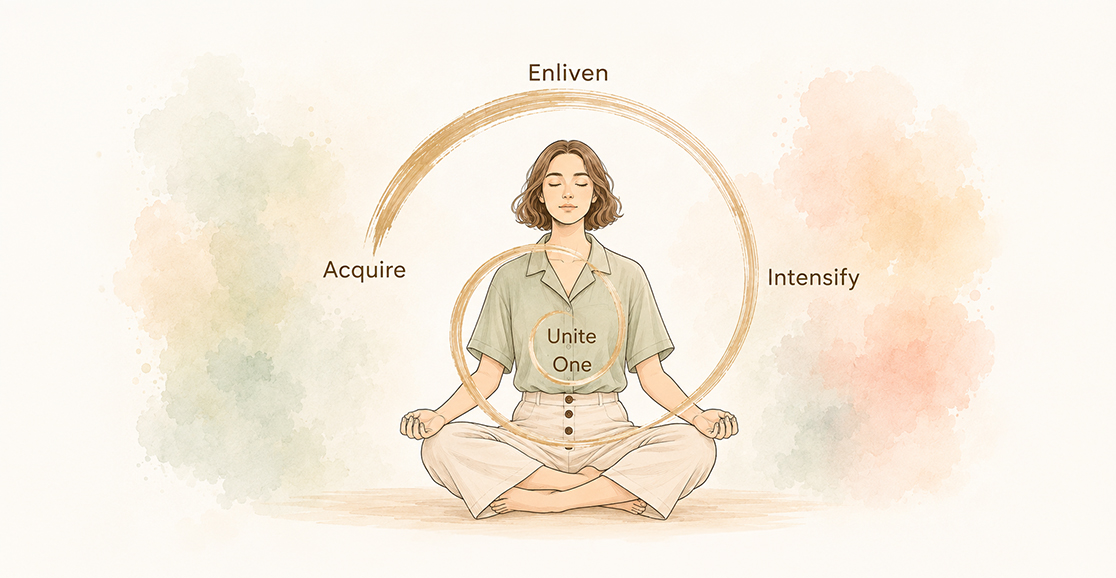
Dear friends, Watch a potter at her wheel. Before there is any question of shaping a bowl, a cup or a diya, she does something that looks like nothing at all. She presses the clay to the centre of the wheel and holds it there. The wheel spins, her hands stay still, and slowly the wobbling lump of clay becomes quiet. Potters say that everything depends upon this moment. Clay that is off-centre may still be shaped, but the faster the wheel turns the more violently it trembles, until it flies apart in the potter’s hands. Clay that is centred can become anything, and it is the same for us. So, what is it in us that corresponds to the potter’s hands? The practice of centring Before we answer that question, let’s review the practice of centring. For many years, we have begun our workshops and training programmes with a moment of centring. Many of you have asked for the text of this simple exercise: Centring: Observe your current attitude, gently turn your attention towards the heart and become aware of your inner condition, resting there in the remembrance of the Divine. This one sentence takes less than a minute to do. What actually happens inside that minute? What is the anatomy of this small act? For reasons that will become clear, we anchor it in the five vowels of our alphabet, A, E, I, O, U. For a meditator, it is vital first to Acquire a spiritual condition, then to Enliven that state, Intensify it, become One with it and remain United with it. Let us take them one at a time. Acquire. The word is chosen with care. We do not create a spiritual condition, any more than a window creates sunlight. The condition is always offered. In the Heartfulness way it is offered with particular tenderness through pranahuti, the Transmission that awaits every heart that turns inward. Our part is to receive. The moment we go into the heart, something is already there: a quietness, a softness, a weight of peace, however faint. To acquire is to notice and accept it, the way an open hand accepts rain. Most people go through life missing the inner conditions they are offered, because no one ever told them to collect what is being given. Enliven. A condition acquired and then ignored fades like an ember left in the wind. To enliven it is to breathe gently upon that ember. We rest our attention on the state, feel its texture and let it spread through us. Whatever we attend to grows; this is the oldest law of the inner life. The condition that seemed a mere trace begins to glow. Intensify. We make it intense but not by force. Intensity in the inner world never comes from clenching. It comes from interest ripening into love, the way a mother’s attention towards her sleeping child is effortless and total at the same time. As love for the condition deepens, the faint becomes vivid, the vivid becomes luminous, and the state that once required all our care now holds us of its own accord. Oneness. We become one with it. Until now there were two, the condition and the one enjoying the condition. Here the distance between them thins and dissolves. We no longer have peace; we are peace. The enjoyer disappears into the enjoyed, and what remains can no longer be called an experience, for there is no one left standing apart to experience it. Union. We remain united with that state. With this final vowel, the practice steps out of the moment and into the day. The condition is not to be left behind on the meditation cushion like a garment removed at the door. It comes with us, underpinning our meetings, the traffic and the cooking, a constant undertone beneath the melody of activity. And why vowels? Try to pronounce a consonant on its own. K, t and p refuse to sound until a vowel joins them. Our duties, errands and engagements are the consonants of any day, necessary and structural and utterly unpronounceable by themselves. The acquired condition is like the vowels. Thread them through the consonants and the same ordinary day begins to speak. One movement, many names There is a family of words that we use almost interchangeably: focusing, centring, being centred, interiorization, internalization and becoming meditative. They are all related but they are not twins. It is worth climbing this ladder slowly, because each word marks a real stage on the way in. Focusing is the outermost rung. It is an act of the mind where attention is narrowed to a beam and pointed at an object. A surgeon focuses, an archer focuses and an accountant focuses. Focus itself is neutral; it borrows its worth from its object. It also costs effort, which is why it tires us. To focus is to hold the mind the way we hold a torch. The grip cannot loosen for a moment. Centring begins when focus changes direction. The beam turns away from objects altogether towards the subject, the one who was focusing. Unlike focus, which may fix upon anything, centring has only one destination. We do not centre on something; we centre in something. Interiorization names the direction of this travel. Consciousness withdraws from the five outer doors, the movement the Yoga Sutra calls pratyahara, the way a tortoise draws in its limbs, the way attention comes home from the street at dusk. Yet it is still a movement and there is still something happening. Internalization is subtler and here the vocabulary deepens. While interiorization moves attention, internalization transforms being. The truth we have heard remains information. A truth we practise becomes a habit. A truth internalized becomes us. It is like dyeing cloth. When we dip the cloth briefly the colour sits on the surface and the first wash removes it. When we let the cloth soak until the dye permeates the fibres, we cannot separate the colour from the cloth without destroying both. Similarly, remembrance begins as an exercise we perform and ends as the fabric of our being. Being centred is a state, not an act. Centring is the visit while being centred is the residence. We may centre ourselves a dozen times a day, and we should, but a day comes when the returning has quietly become a remaining, and we discover we no longer need to go to the Centre. We live there and go out from it on errands. And being meditative? Here language reaches its most delicate rung. A meditative state is not confined to closed eyes. It pervades walking, working, listening and speech. And observe how carefully we must say ‘arriving at a meditative state’ rather than ‘having arrived’. We are always arriving because the state is always receding. When we walk towards the horizon it retreats; when we walk further it retreats further. But it is the horizon inviting us, not mocking us. Because the Centre is infinite, the state that reflects it deepens without end. A goal that can be reached, finished and filed away is a finite goal, unworthy of the soul’s appetite. So, arriving is the permanent tense of the seeker. Never finishing to arrive is the signature of an infinite Beloved. When you look once more at the five vowels, you will see how they climb the whole ladder. To acquire a condition, attention must first reverse its direction. Focus turned inwards means centring has begun. To enliven and intensify it is interiorization deepening, the tortoise settling further into itself. To be one with it is internalization, the dye entering the last fibre. And to remain united with it during the daily traffic, conversation and work is nothing other than the meditative state, the horizon we are forever arriving at. With these five vowels, the entire inner journey is rehearsed in miniature. Why the Centre? Babuji Maharaj expressed the whole science in two sentences: ‘Meditation really means that the mind becomes accustomed to the Centre itself instead of wandering elsewhere. Meditation on the heart is prescribed for that purpose.’ Notice that Babuji does not say meditation means stopping thoughts, achieving stillness or manufacturing peace. He says the mind becomes accustomed to the Centre. It becomes habituated, at home there. A mind wanders because it has made its home on the periphery, in objects, opinions and anxieties. When you give it a truer home, the wandering resolves itself, the way a river stops meandering when it finds the sea. Babuji called this destination the innermost central point, the seat of the soul. It has been present in us since the dawn of creation. We have not been carrying it all these years; it has been carrying us. We fail to recognize the Centre, though it is always present, only because we are absorbed in the surface activity of the mind.  The ancient rishis folded this wisdom into language itself. The Sanskrit word for health is svasthya, built from sva, meaning ‘one’s own Self’, and stha, meaning ‘established’ – to be established in oneself. They were telling us that to be healthy is to be self-situated. A person can carry flawless medical reports and still be asvasthya or dis-established, scattered across worries, screens and yesterday’s arguments. And we all know the opposite, someone whose body is failing yet who radiates a wholeness that fills the room. Language remembers what medicine is now rediscovering, that equilibrium is not only one of the benefits of being centred, it is the very definition of health. When we wish someone ‘swasth raho [stay healthy]’, we are in truth wishing them to remain established in themself. There is an important distinction to be made: having a Centre does not automatically make us centred. Every one of us possesses this innermost point, yet how many of us live from it? Centredness is present to the extent that our consciousness is settled on the Centre. Focusing on the Centre is the consciousness equivalent to supporting a physical object’s point of balance. It is the source of personal equilibrium. When our focus is instead diverted from the Centre and skews towards less essential levels of existence, we become unstable. We become vulnerable. In such moments our weaknesses reveal themselves and we backslide. This explains something we have all puzzled over. Why do the old tendencies return just when we thought we had outgrown them? Why does anger flare in a person who has meditated for twenty years? It is not that the practice has failed. It is that consciousness has drifted off-centre in that moment. Returning to the analogy of the potter’s wheel, the clay has slipped in the potter’s hands and the spinning of daily life does the rest. The fault is not in the wheel or in the clay but in the drift.   The pace of the periphery Now, let’s become aware of something we passed over earlier. Every point on a wheel completes one revolution at the same time, yet not every point works equally hard. A speck of clay near the hub barely stirs; it traces a small, calm circle and it is done. In contrast, a speck at the rim must race, covering many times the distance in the same breath of time. It is the rim that flies apart first when the wheel spins too fast. The farther we are from the centre, the faster we must move merely to keep up. The heavens teach the same law on a grander scale. Venus lives close to the Sun and so completes her circuit in about seven months. The Earth needs a year. Saturn, wandering far out in the cold, takes twenty-nine years to accomplish a single revolution, and were he to insist on keeping pace with Venus, and staying in line with her and the Sun, he would have to tear across an orbit nearly ten times as wide at a speed no planet could sustain. There is always a price for distance from the centre, either in frantic velocity or in long, cold delay. Is our inner life any different? The farther our consciousness drifts from the Centre, the more furiously we must move to feel even faintly in tune with it. A life lived at the periphery, focused on possessions, positions and opinions, becomes a life of running. It requires more stimulation, achievement and reassurance, with each circuit longer than the last, each satisfaction briefer. We call it the pace of modern life but the stress and exhaustion are not really from overwork. They result from distance. The one who lives near the Centre hardly moves at all; a single thought of the Divine completes the circuit, the way the speck of clay near the hub completes its circle with a quiet, effortless turn. And what happens at the very Centre? The Sun does not orbit anything. It simply shines, its stillness feeding all the motion around i t. And so it is with one who is established in the Centre; there is the least movement and the greatest radiance. The simple solution This awareness gives us great encouragement and hope. If our weaknesses show themselves only when we are off-centre, then we need not wage war against each weakness one by one. That war is exhausting. Also, the qualities we are fighting have a way of feeding on the attention we give them. The simpler way is to return to the Centre. A mind settled on the Centre provides no food for jealousy and no oxygen for resentment. Negative qualities are not so much conquered as vacated and positive qualities have no need to be forced. Courage, generosity and patience are the natural radiance of a consciousness at rest in its Centre, just as warmth is the natural radiance of a flame.  So, we may shun the negative with confidence, because we are not fighting it but simply refusing to live in its neighbourhood. And we may embrace the positive with courage, because it is already ours, waiting at the Centre for us to claim it. Centred yet engaged There is an old doubt that often remains: Does turning inwards mean turning away? Must we withdraw from family, work and responsibilities to be centred? On 12 January 1946, revered Lalaji Maharaj intercommunicated from the Brighter World and shared a Persian couplet with Babuji Maharaj: Nami goyam ki az duniya juda bash! Bahr kare ki bashi ba Khuda bash. I do not ask you to be away from the world, only to attend to everything with a conscious idea of the Divine. This is a prescription for balanced living. It describes an engaged centredness. The potter does not stop the wheel in order to centre the clay. She centres it while the wheel spins. Our wheel is the world – the office, the kitchen, the traffic, a difficult relative and an unfinished task. None of it needs to stop. Lalaji asks only that something in us remains settled on the Divine in the midst of it all. And now we can answer the question we left open at the beginning: What corresponds to the potter’s hands? It is not willpower, which wobbles along with everything else on the wheel. It is a remembrance. The gentle, repeated returning of our attention to the heart is the steadying pressure under which our wobbling nature slowly becomes quiet, workable and ready to be shaped into something that can hold light. Grace does the shaping. Remembrance holds us still enough to receive it. So the next time we sit together and I invite you to take a few moments to centre yourself, know that this minute is not a formality before the real programme begins. It is the whole teaching in miniature. Observe, go into your heart, remember. The wheel of the day will spin regardless, but whether you tremble or become something beautiful depends upon where you rest. With love and respect, Kamlesh

Read More
cover
30 Oct 2024

The Light of Consciousness: Diwali's Spiritual Awakening

- Daaji Diwali, the Festival of Lights, represents a timeless message passed down through the ages. It is far more than a celebration of flickering lamps or colourful fireworks; it is an ancient dialogue with consciousness. Our ancestors conveyed profound truths not through words but through visual graphics. The universal language of images, sculptures, and rituals could withstand merciless decay with time and could reach across generations or even millennia. For example, what is the lifespan of paper? Even the palm leaves that the ancient people used were prone to infestation, wasn't it?  So they used visual graphics like sculpted forms, carved images, and crafted rituals, all designed to convey wisdom that could not be contained in these fragile mediums of communication. Unlike written records, these visual graphics endure, outlasting degradation due to the passage of time. These visual graphics became a powerful sign language and percolated even into the form of rituals that we perform generation after generation.    The Significance of Ritual and Symbolism Rituals like lighting lamps are more than gestures, they are a silent and powerful "sign language" to people, a visual graphics guide that urges us towards our inner selves, to recognise and awaken to the light within. Just as a person who has a hearing challenge appreciates sign language, we learn from the symbols embedded in our rituals. For example, Mother Durga, portrayed with multiple arms, symbolises her manifold abilities, while Brahma, depicted with four heads, embodies omnipotence, a soul capable of seeing in all directions. These sculptures and forms are visual stories in themselves, teaching without words, and conveying profound truths. The wise ones understand them to be “enlighten yourself with knowledge.”  In the ritual of Diwali, when we all light lamps, it is a graphic reminder to dispel not just external darkness but mainly our own inner darkness dominated by the inertia of habits that limit us. Rather than saying outright, “See your inner light,” these rituals invite us to explore and discover the light within. Through these symbols, we’re reminded of the dormant wisdom within, waiting to be rekindled. That is why this festival of lights is one of the most important festivals no matter what religion or tradition you belong to or the location you hail from. In some way or the other, it is present in most traditions. In Jainism, Diwali marks the spiritual awakening of Lord Mahavira. In Sikhism, it honours the day that Guru Hargobind Ji, the Sixth Sikh Guru, was freed from imprisonment. Buddhists in India, too, celebrate Diwali as the day when Emperor Ashoka converted to Buddhism, and spread Buddhism across half the world. South India celebrates Diwali as the day Lord Krishna defeated the demon Narakasura and released thousands of unmarried women and kings from his jail. North India celebrates the story of King Rama's return to Ayodhya after he defeated Ravana and rescued Mother Sita from Ravana's captivity. In some areas, it is the day on which Lord Vishnu, the Preserver of cosmic order, sent the demon King Bali to rule the nether world. For that matter, even Christmas is a festival of light and joy, only it is celebrated a couple of months later.    Diwali's Universal Message of Hope  My spiritual teacher, Pujya Babuji Maharaj said in the book, Voice Real, "Life means liveliness; damnation for those who are dead at heart." Love, liveliness, and joy lead to life, while greed, envy, selfishness, and materialism lead to darkness, death or destruction.  The two great Indian epics Ramayana and Mahabharata show that it is not greater might that leads to victory but dharma, or righteousness. With a vastly bigger army and stronger heroes, the Kauravas lost the war with the Pandavas because they supported an unethical, immoral cause. A similar lesson is found in the Ramayana. In the same spirit, Zarathushtra, the ancient Persian prophet, taught that 'Asha', a key concept that represents the principle of truth, order, and righteousness in the universe would ultimately prevail over 'Druj', a concept that implies deceit, falsehood and chaos. The stories of David and Goliath in the Bible and the Exodus story in the Torah similarly demonstrate that it is not greater might that leads to victory, but rather, divine will and righteousness. Diwali thus offers a timeless message of hope, faith, courage, and victory of light over darkness, a universal heart-to-heart message shared across spiritual traditions.   Inner Transformation and the Light of Consciousness This victory of light over darkness is not merely external; it signifies a deeper, inner transformation. It is not just a physical light or the light of the intellect but an en-lighten-ment of the heart, the glow of a lamp which once lightened, never goes out. Our rituals use symbols to enthuse children, but as we grow up, we are called to transcend symbols, rituals, and toys, moving toward a life of expanded consciousness. Diwali in the Modern World  Diwali invites us to a spiritual and philosophical reflection of our existence. Yet, its message of light triumphing over darkness has profound implications for the modern world as well. It inspires us to adopt sustainable practices, and the victory of good over evil resonates with the ongoing fight for social justice, calling us to stand against inequality and oppression. In essence, Diwali's message is a holistic one, encompassing spiritual well-being, social responsibility, and harmonious coexistence with our planet. The symbolism of light over darkness also calls for a return to simplicity and a rejection of excessive materialism. In recent times, Diwali has become increasingly commercialised, with a focus on extravagant spending and displays of wealth. However, the true essence of Diwali lies in its spiritual significance, which emphasises inner light and the triumph of good over evil. By embracing a simpler, more mindful approach to Diwali, we can rediscover the festival's deeper meaning and contribute to a more sustainable and equitable world. The Path to Higher Consciousness  To attain this my spiritual teacher Babuji Maharaj in the book, Complete Works of Ram Chandra, Volume 5 in the chapter, The Absolute, said, "Life in life is the real life. Then why should we fear death?" To experience 'life in life', or a state of eternal wakefulness and awareness, we need to draw from the "Source of Light" or life, deep within the heart. The yogic Transmission of Pranahuti from the spiritual guide can facilitate this process. But we must cultivate interest and inclination in us to receive it and work on ourselves. Once true interest is sparked, the rest of the journey flows with ease. The spiritual journey brings joy only to the extent that consciousness is free from enslavement to 'I' and 'mine.' This attachment isn’t limited to material desires; it can also include emotional and cognitive attachments to ideas, people, or lifestyles.  With this understanding, one realises that true illumination comes from higher consciousness - call it Soul, God, or pure Emptiness. As the immortal bard put it, "A rose by any other name would smell as sweet." Awakening to the Light Within On the journey of the soul’s consciousness that illuminates objects of knowledge, the seer witnesses them in the field of consciousness. Reflecting on this journey, Babuji observes, “The body consciousness goes off at some stage, then soul consciousness comes, and then consciousness of consciousness also bids farewell. It is ‘Towards Infinity.’” In all its forms of celebration, Diwali ultimately guides us on a spiritual journey, urging us from external lights and festivities toward the inner light of consciousness. Just as Diwali celebrates the triumph of good over evil, so too does our spiritual journey involve dispelling inner darkness with the radiant power of the soul. Let the light of Diwali illuminate our hearts and guide us on the eternal path to inner awakening.
Read More
cover
30 Aug 2024

Spiritual Transmission and Fulfillment: Reflections from Daaji on Janmashtami

Namaskaram and Happy Janmashtami! On this blessed occasion, Daaji offers profound insights into the  spiritual journey , reflecting on a significant conversation between Lord Krishna and Pujya Babuji Maharaj. This blog post captures the essence of Daaji’s message, emphasizing the importance of spiritual transmission, the balance between material and spiritual life, and the commitment required to fulfill our spiritual goals. A Divine Conversation: Lord Krishna and Babuji Maharaj Daaji begins by recalling a remarkable conversation between Lord Krishna and Babuji Maharaj that took place on a Janmashtami morning. During this sacred interaction, Lord Krishna asked Babuji to bless everyone involved in ‘Jhulna Jhulana’ with spiritual transmission. ("Jhulna Jhulana" is a tradition associated with Janmashtami, where idols of Lord Krishna are placed in a decorated swing and swung gently as part of the celebrations.)  Babuji, in his humility and devotion, agreed to this request, acknowledging the grace of his Guruji, Lalaji Maharaj. However, he added a significant condition—this blessing is reserved for those who are sincere in their spiritual pursuit. This conversation highlights the powerful connection between spiritual transmission and the dedication required from each practitioner. The Role of Spiritual Transmission In  Heartfulness meditation , spiritual transmission plays a vital role in accelerating the spiritual growth of practitioners. Daaji emphasizes that this transmission is not merely a gift but a responsibility. Those who receive it must be sincere in their spiritual practices and committed to walking the path with integrity. The conversation between Lord Krishna and Babuji serves as a reminder of the sacred nature of this transmission and the importance of sincerity in the spiritual journey. Balancing Material and Spiritual Life A central theme in Daaji’s message is the need to balance material life with spirituality. He stresses that our material actions should be infused with the fragrance of spirituality. This balance is not achieved by renouncing the world but by integrating spirituality into every aspect of our lives. Daaji suggests that whatever we do, we should do it with love and remembrance of the Divine, allowing spirituality to permeate our daily activities. He offers two approaches to achieving this balance: Absorption in the Divine: Engage in your tasks with a meditative and loving focus, where every action becomes an offering to the Divine. Sankalpa (Intention): Approach your responsibilities with the firm intention that they are guided by the Master’s will. This perspective removes the ego from your actions and aligns them with a higher purpose. Love, Forgiveness, and the Spiritual Community Daaji also addresses the importance of love and forgiveness within the spiritual community. He warns against actions that could harm others or create a negative environment, as such behavior is detrimental to both personal growth and the growth of the spiritual mission. Daaji encourages practitioners to approach each other with understanding and compassion, reminding us that we are all representatives of the Master. By fostering a community grounded in love and forgiveness, we create a supportive environment conducive to spiritual growth. Dedication to the Spiritual Path Spiritual fulfillment, Daaji reminds us, requires complete dedication. It’s not enough to meditate or engage in spiritual practices sporadically; every breath, every moment, must be dedicated to the spiritual path. This level of commitment is what enables us to fulfill our individual goals and contribute to the greater mission of spreading the Master’s message globally. Daaji underscores that this commitment is particularly crucial on auspicious days like Janmashtami, a time when our spiritual efforts can have an even greater impact. He calls on all practitioners to sincerely commit to this path, making sacrifices as needed to fulfill the spiritual dream of their hierarchy. Fulfilling a Global Spiritual Dream As Daaji concludes his Janmashtami message, he urges us to reflect on our role in the global spiritual mission. He reminds us that spreading the message of the Master to every heart around the world requires more than just words—it requires us to live as true examples of the teachings we follow. This commitment to living a life infused with spirituality is what will make our world thrive with spiritual energy. On this sacred day, Daaji calls for a heartfelt promise: to do our best in fulfilling the spiritual dreams of our hierarchy, contributing to a world where spirituality flourishes. This promise, he reminds us, will require sacrifices, dedication, and a deep commitment to the principles of Heartfulness meditation.  
Read More
cover
21 Aug 2024

Are You Taking More Than You're Giving? Life Lessons from Nature

Many people ask me, Kamlesh, what is the best quality a human being should have? Three things stand out in my heart: simplicity, purity, and humility. While simplicity and purity are well understood, the significance of humility is often overlooked. Humility: A Lesson from Mango Trees In summertime, when mangoes grow heavy on the branches, the weight causes the branches to bend and touch the soil. If the branches tried to remain erect, they would break under the weight, destroying the tree. Similarly, with growth and progress, we should bow down with humility. Without humility, we cannot be truly human. Lessons from Cows: Generosity in Giving Consider cows: they take grass, water, and nutrients and give us milk. Ultimately, they sacrifice their lives, giving more than they take. Nature, in its generosity, provides a powerful  life lesson . Everything around us takes the minimum and gives the maximum. Reflecting on Our Own Contributions As humans, we take the best from nature. Our intake is always the best, but what about our output? We must strive to emulate nature's generosity, giving back more than we take. Applying These Lessons Embrace Humility: Like the branches of a mango tree, be willing to bow down with the weight of your achievements. Recognize that without humility, progress can lead to downfall.     Value Simplicity and Purity: Maintain simplicity and purity in your thoughts and actions. These qualities are fundamental to a balanced life.     Give More Than You Take: Follow nature’s example. Whether through your actions, words, or resources, ensure that your contributions exceed your intake.     Reflect on Nature's Generosity: Look around and learn from the natural world. Every element of nature takes the minimum necessary and gives back abundantly. Strive to embody this principle in your daily life.     Practice Heartfulness: Integrate these lessons into your  spiritual practice . Heartfulness meditation can help cultivate simplicity, purity, and humility, enhancing your ability to give back generously.  
Read More
cover
21 Aug 2024

Exploring the Purpose of Our Existence

It's automatic that when someone curses you, you may respond with anger or even violence. However, if you are elevated like Buddha, with a high level of awareness, you may respond with peace, understanding that it's the other person's problem, not yours. Doing Your Best One way to approach life is to do your best in every situation. Achieve the best results in the worldly sense. But if the soul, separated from the source and born many times, returns to the same condition, where is the growth? It would be a foolish game played by God if we returned as we came. Instead, through our  spiritual practices (sadhana), we should multiply our soul's potency many times over. The Growth of the Soul Life after life, we can increase the potency of our soul. This is why we meditate—to enrich the soul. Just as we experience physical, mental, and emotional growth, we must also grow spiritually. Hinduism often assumes the soul is changeless and pure, but if it were, why would we need to purify it? Sahaj Marg suggests that the soul's potency should grow infinitely, returning with increased consciousness and awareness. Understanding Consciousness Consciousness can be defined as the degree of awareness. The extent to which we are aware—or unaware—matters. Trees, for instance, have a basic level of consciousness, aware of sunlight, oxygen, and carbon dioxide. Humans, however, possess not only awareness but also the ability to respond. Appropriate responses, especially towards loved ones, are crucial. Elevating Consciousness Often, our responses to loved ones are erratic, driven by emotions, temperament, and ego. This can spoil relationships, particularly with parents. Elevated consciousness helps us respond appropriately to various situations, enhancing our humanity. When cursed, a high level of awareness allows you to remain peaceful and blissful, understanding that the issue lies with the curser, not you. Multiplying the Soul's Potency Increasing our level of awareness, understanding, and responsiveness enhances the potency of our soul. Like being given a million dollars and expected to multiply it, the soul's given potency must also be multiplied. This multiplication gives purpose to life. Emotional Resilience Life involves emotional ups and downs. Feeling tired, depressed, or sad is part of our existence. There is nothing wrong with crying or feeling sad at times. It's okay to experience these emotions as part of the journey of life.  
Read More
…