13 June
A significant highlight of Daaji’s travels in Delhi and Uttar Pradesh was the inauguration of the Bharatiya Gyan Parampara Kendra (Centre of Indian Knowledge Systems—CIKS) at Galgotias University situated in Greater Noida. CIKS is envisioned to blend India’s ancient knowledge systems and spiritual wisdom with contemporary science, innovation, and AI. In alignment with the Ministry of Education’s vision of embedding India’s intellectual heritage into higher education, this initiative marked a thoughtful step toward preserving tradition while preparing institutions for the future.
Daaji’s arrival at the university was met with ceremonial fanfare. NCC cadets lined a red carpet, standing in formation. The university’s chairman, his son, and the family received him warmly. The welcome was formal, yet personal.
The first stop was the inauguration of the Heartfulness Lounge—the first of its kind within a university in India. The lounge was designed as a dedicated space for students to learn and practice Heartfulness meditation. Fully air-conditioned and thoughtfully furnished, it featured instructional videos, a curated selection of Heartfulness literature, and weekly sessions led by certified trainers. Daaji offered prasad and formally opened the space.
On stage, Daaji was felicitated by the university’s Chancellor, Shri Sunil Galgotia, and the CEO, Dr. Dhruv Galgotia, before the unveiling of the CIKS plaque. Soon after, a Memorandum of Understanding (MoU) was signed between Heartfulness and Galgotias University, laying the foundation for collaborative research, educational programs, and outreach initiatives.
In his inaugural address, Daaji highlighted how the essence of Indian knowledge lies not just in preservation but in integration—reviving the wisdom of the Vedas, Upanishads, and spiritual sciences while making them relevant to today’s students. He urged the younger generation to carry forward this legacy with scientific curiosity and experiential practice, particularly through meditation. His reflections beautifully emphasized that true knowledge must not remain confined to books but should transform minds, hearts, and ways of living—an echo of the very aim behind the new centre.
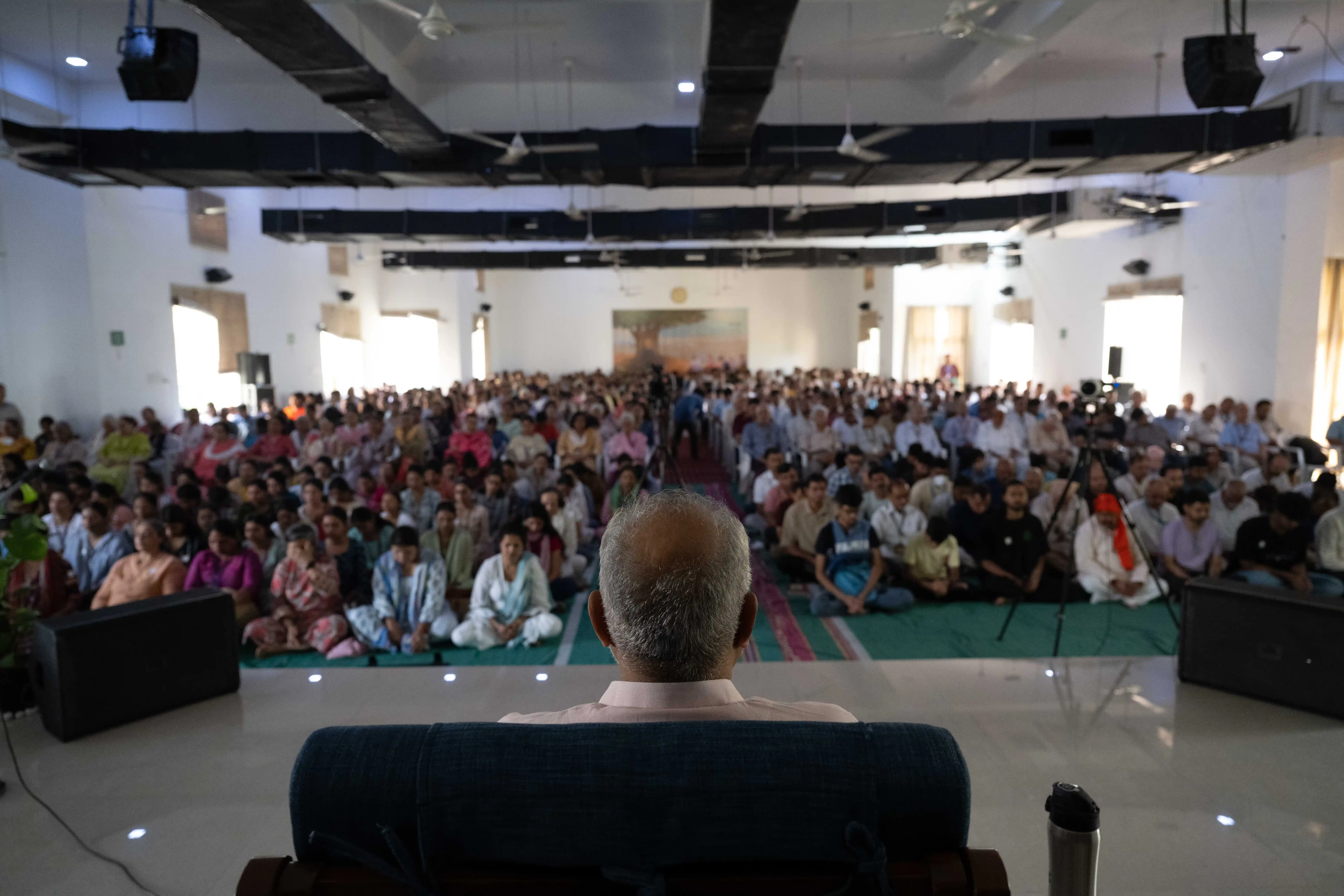
Following the meditation session led by Daaji, a lively and engaging Q&A unfolded. Here are a few excerpts from it.
Q: My peers mock me, saying meditation is doing you no good, one can’t really focus during it, and tranquillity isn’t a real thing. I really want my loved ones to feel the peace I feel during meditation. How can I make them understand this?
Daaji: Welcome to the world of struggles in life! If you try to convince others, it will always fail. Practice yourself; it’s for yourself. And once they start seeing change in you, the trajectory of your life, then they will be awed. My college mates in LM College of Pharmacy, Ahmedabad, also made fun of me back in 1976 when I started meditating, but soon enough, when my professors began to notice the change in us (a group of 25 who were meditating in college), they began to meditate—including my dean, who is now 99 years old. If one compares the students back then who weren’t meditating, and their families now versus the students who were meditating and their families now, you will notice a big difference.
I recommend you read a book The Biology of Belief by Dr Bruce Lipton which teaches how our lifestyle impacts our inner environment, our genetic manifestations, and how life changes simply by thought. It is our ancient wisdom packaged in a new style!
For example, Dr Lipton researched how the external environment changes the genetic manifestation of the embryo while in the mother’s womb. He noted that when an expectant mother lives under constant stress, her sympathetic nervous system activates, diverting blood from the abdomen, lungs, and brain to the limbs. The fetus experiences the same effect, leading to poor brain and digestive development. With reduced blood flow to the frontal cortex, thinking weakens while the primitive brain dominates, making the child reactive and prone to ADHD. In Indian tradition, pregnant women were often sent to their parents’ homes to stay happy and relaxed. This kept the parasympathetic system active, leading to calmer and more intelligent children.
Q: How can Heartfulness app help us become mindful, emotionally resilient and socially attentive leaders in this modern world?
Daaji: All three aspects of life you mentioned are to do with your awareness. When Lord Krishna says in the Bhagvad Gita, “yoga karmashu kaushalam,” i.e. if you take meditation seriously and attain a state of yoga, all your activities in that state of mind will attain perfection. Meditation and cleaning are the means, it is up to you how to use them.
Q: Some scriptures highlight desires as good, some do the opposite. How do you align western philosophies of existentialism, nihilism with Indian philosophies?
Daaji: Everyone says ‘don’t have desires.’ But how would you proceed in life then? If you wish to eat, you go to the canteen and eat. When you go home, and your mother has cooked something but you say you only want pizza, then something is wrong. Passion, which leads to desires, cannot ever be destroyed. You cannot have compassion without passion. Love, hate, likes, dislikes—all carry energy, and energy cannot be destroyed, only transformed. If a desire arises in the heart, what to do with it?—transform it, and make it better. So desires are not wrong; what matters is how and for what we use them. Similarly, the mind is not bad—we have to just train the mind, and the only mental gym we have is meditation. Ego too is not always negative. If it pushes you to improve, it is helpful; but if it makes you feel superior to others, it becomes arrogance. Ultimately, it depends on how we use our desires, mind, and ego—it’s about perspective.
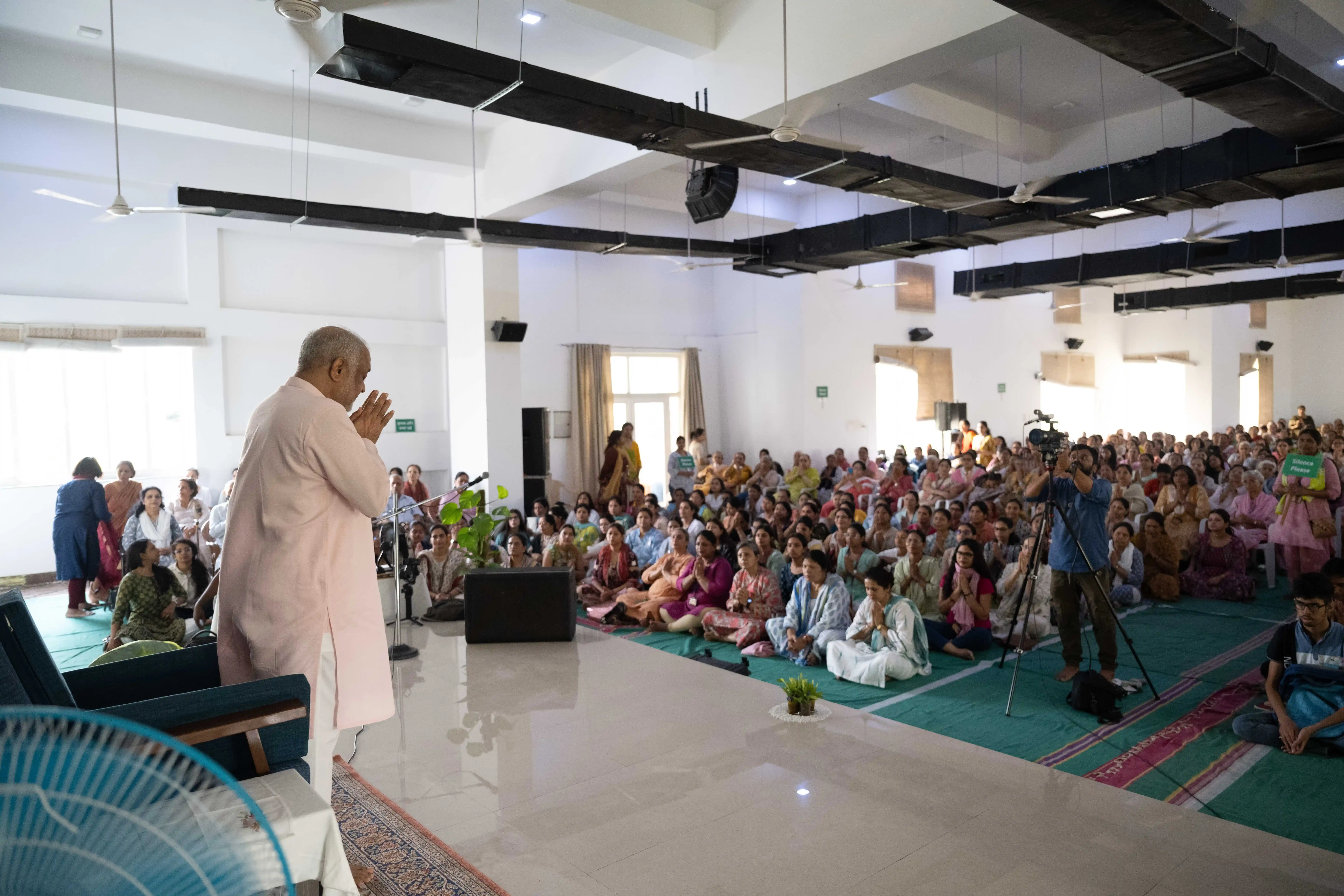
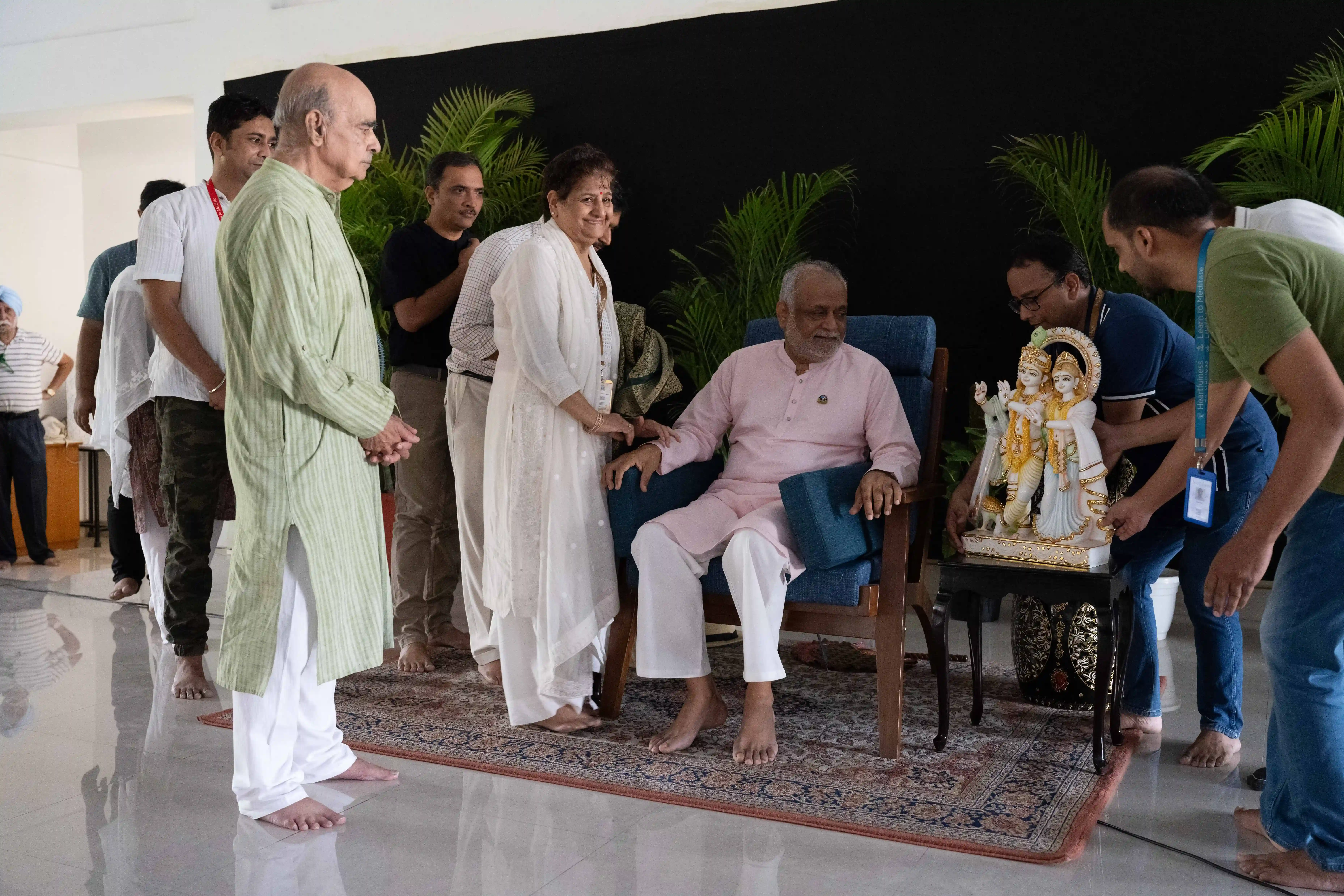
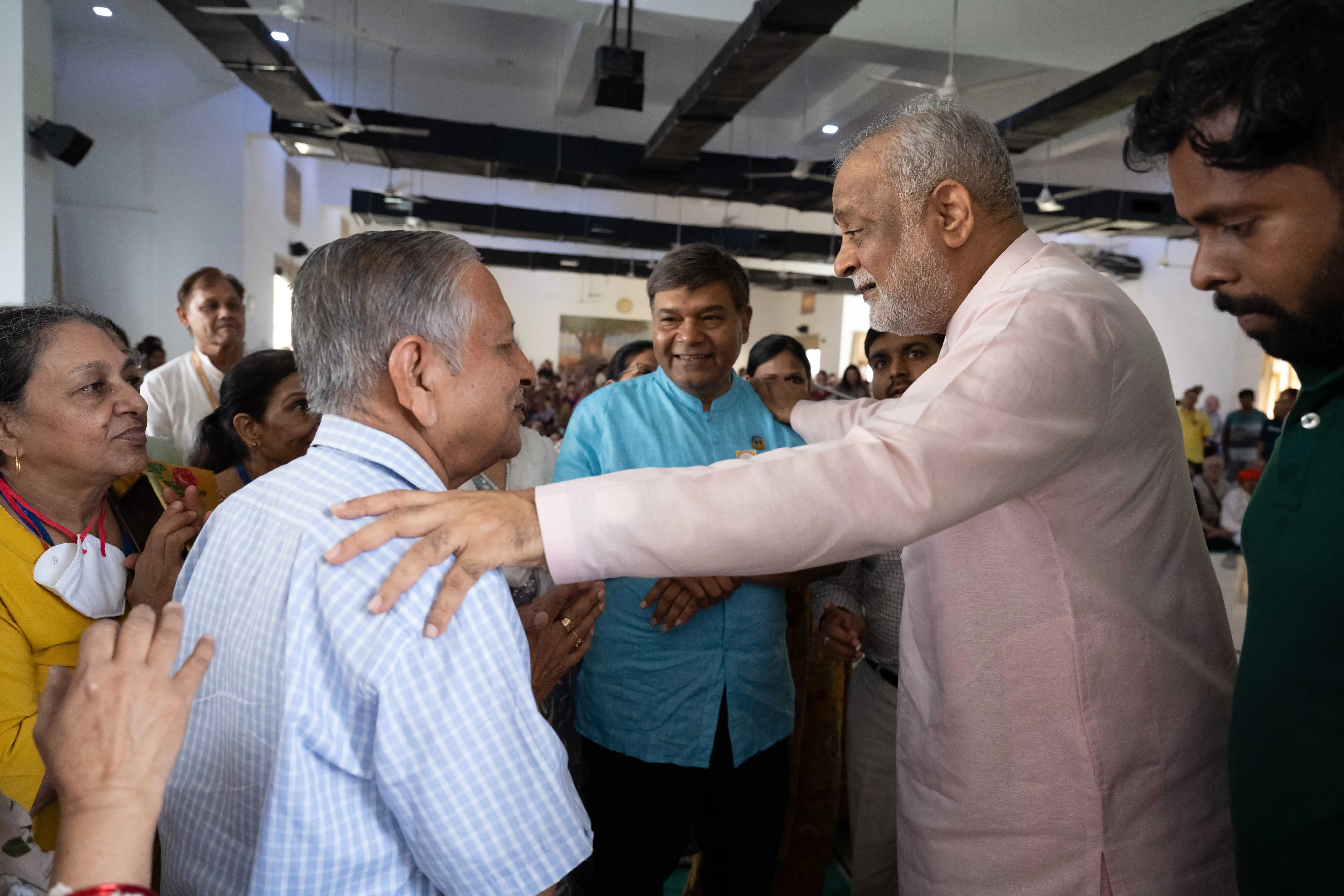
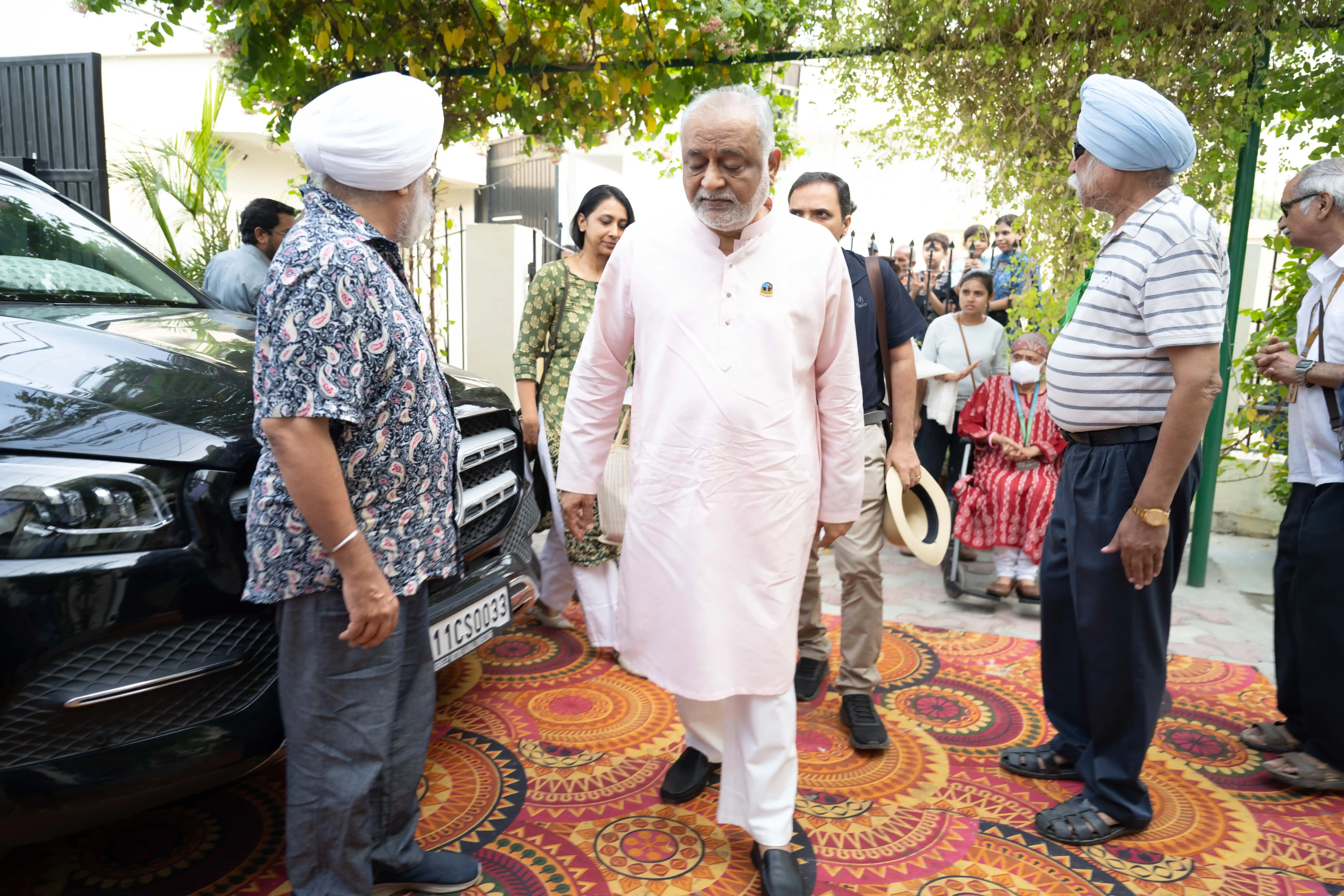
After the talk, Daaji joined the chairman’s family and a few visiting professors from Singapore for a private lunch. Later in the afternoon, Daaji traveled to the home of a long-time preceptor and abhyasi family in Noida. Later, though the schedule was originally set aside for writing and recovery, Daaji decided to visit the Noida Ashram, where a large group of abhyasis had gathered in the meditation hall. Daaji conducted a brief session there and spent time with the abhyasis before returning home.
Dinner was followed by a few short meetings with dignitaries who had come to consult on upcoming projects. The day closed late, but on a note of progress—calm, deliberate, and forward-looking.