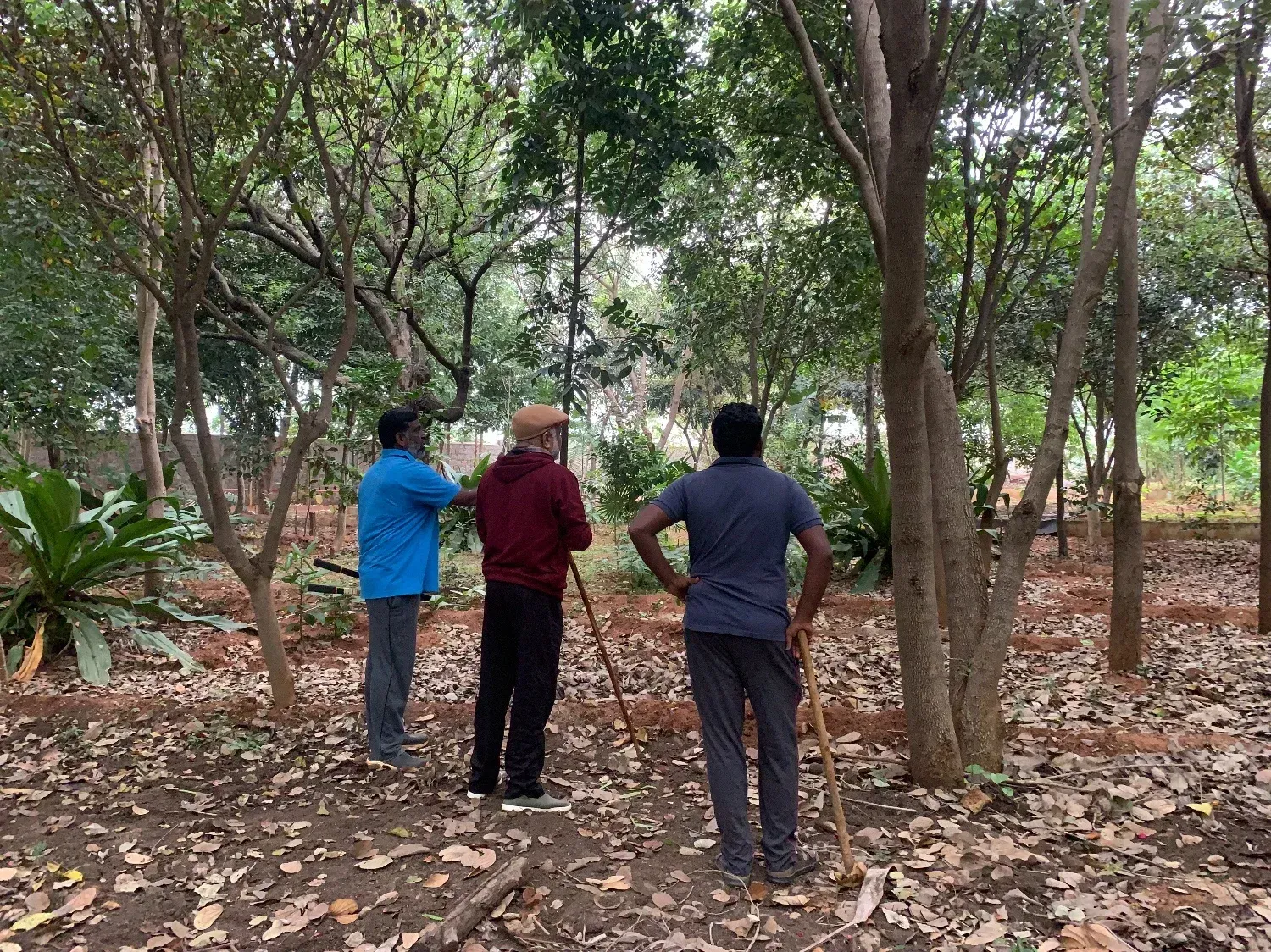
Daaji woke up at about 4 am and went for a walk at 7 am. It was suggested to relocate some trees to another place, the reason being that not enough sunlight was reaching them as they were growing too close to each other in certain places.

When you do something deliberately with an intention then it is an act of observation. It is not accidental or coincidental. Witnessing is something you see without any intention. When your intention gets mingled with witnessing then seeing becomes an observation.
But you just pass by anything without any reaction, having no intentions. No reactions mean no likes or no dislikes. Like Lord Krishna says in the Gita, that we must lead our lives in such a way that we do not absorb things just like a lotus leaf does not get affected even if it is in a dirty pond.
Daaji woke up at about 4 am and went for a walk at 7 am. It was suggested to relocate some trees to another place, the reason being that not enough sunlight was reaching them as they were growing too close to each other in certain places.
After the walk and breakfast, Brother Venkat Sonnathi came to collect some sample images of documents created with Daaji's handwritten font, along with the font sample itself. Daaji then took a one-hour rest before coming down for lunch.
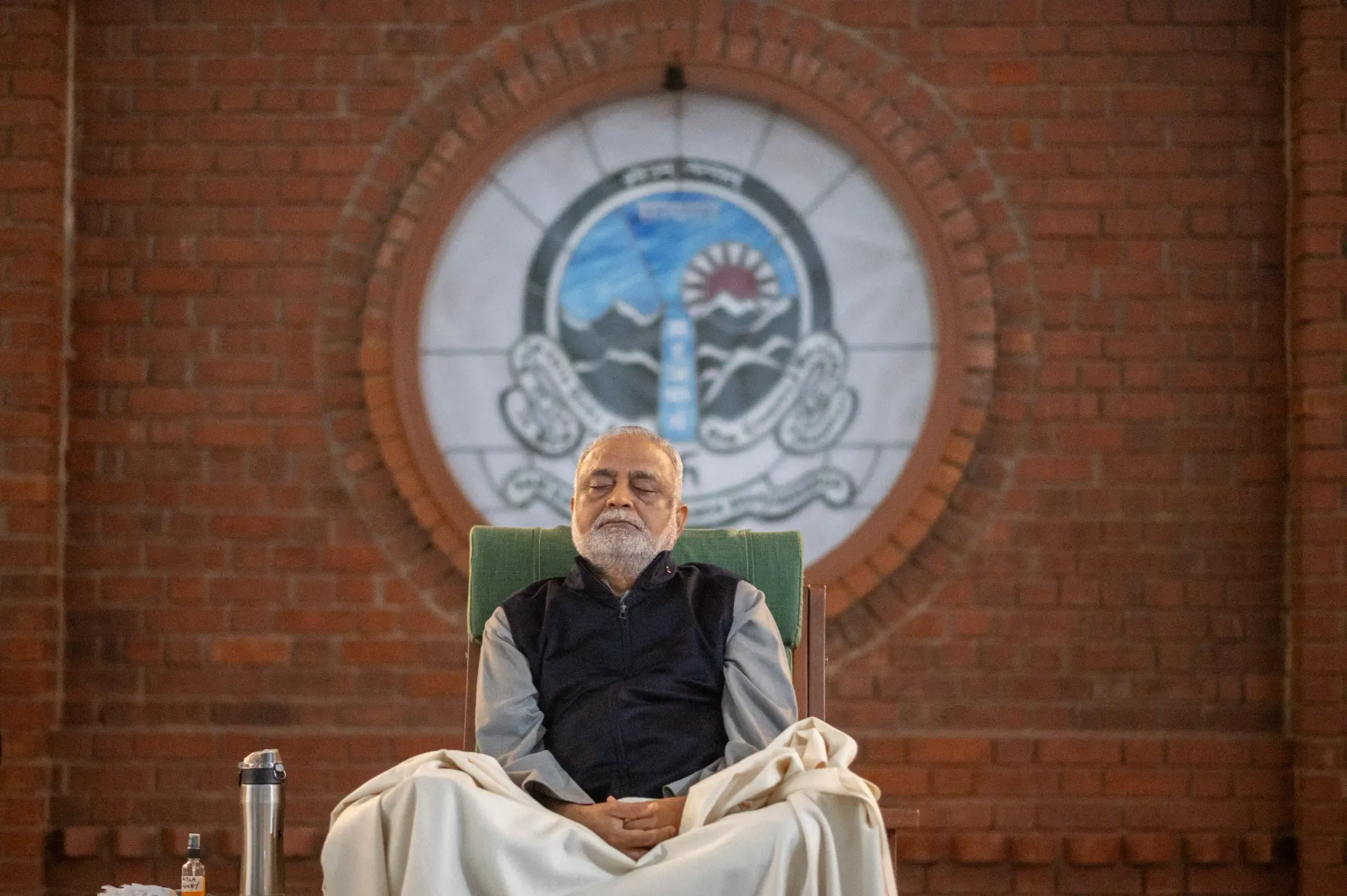
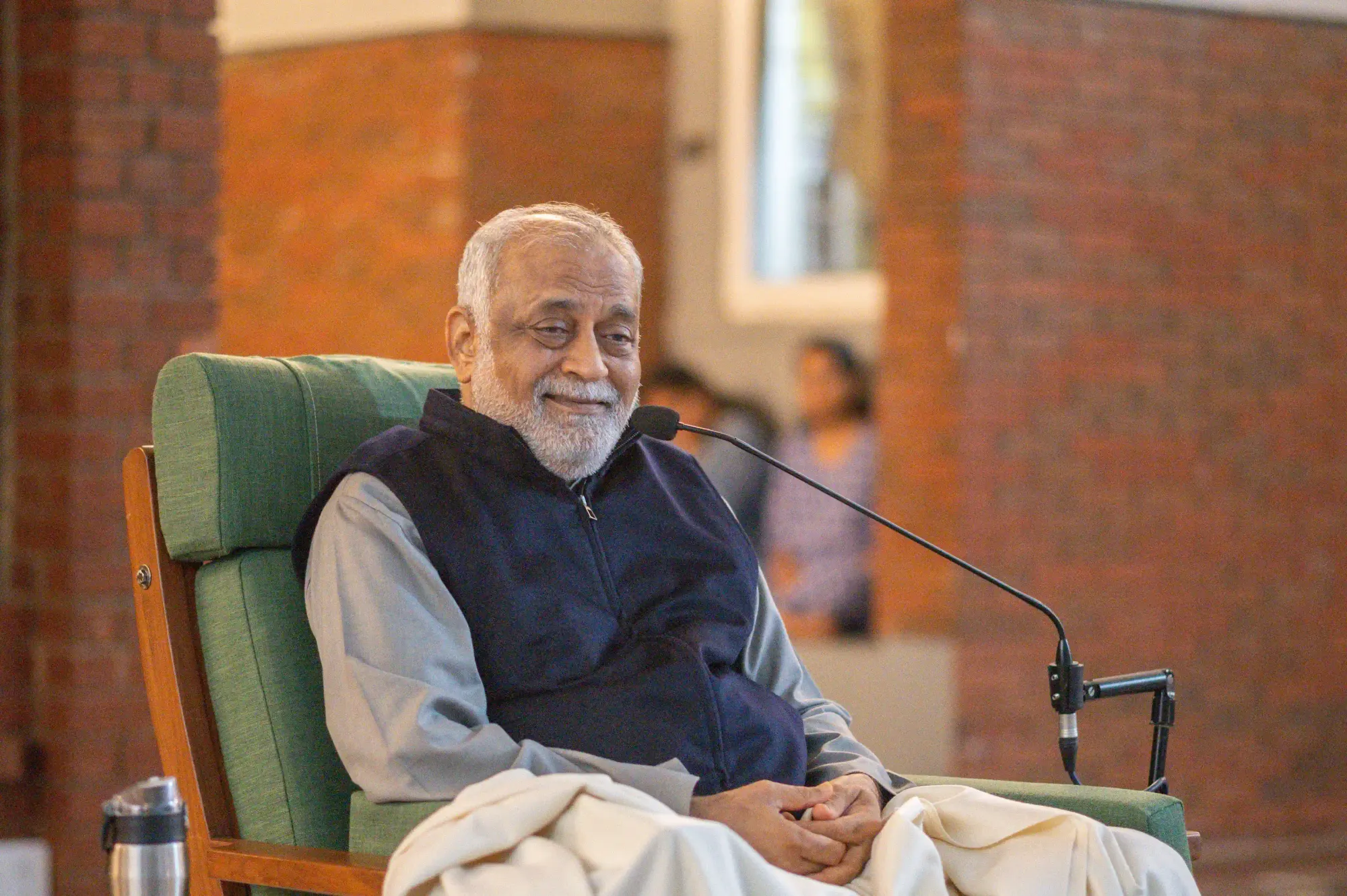
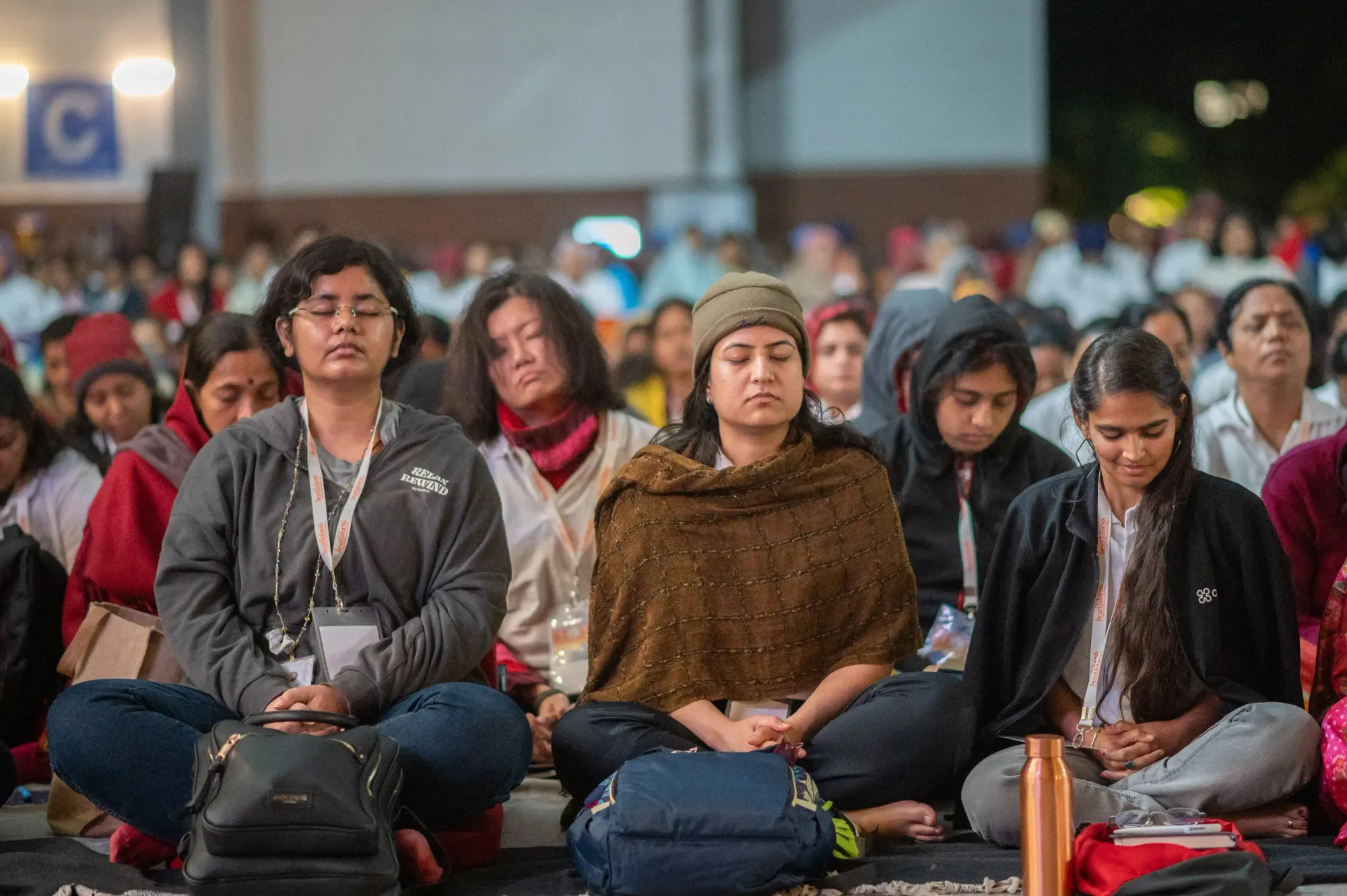
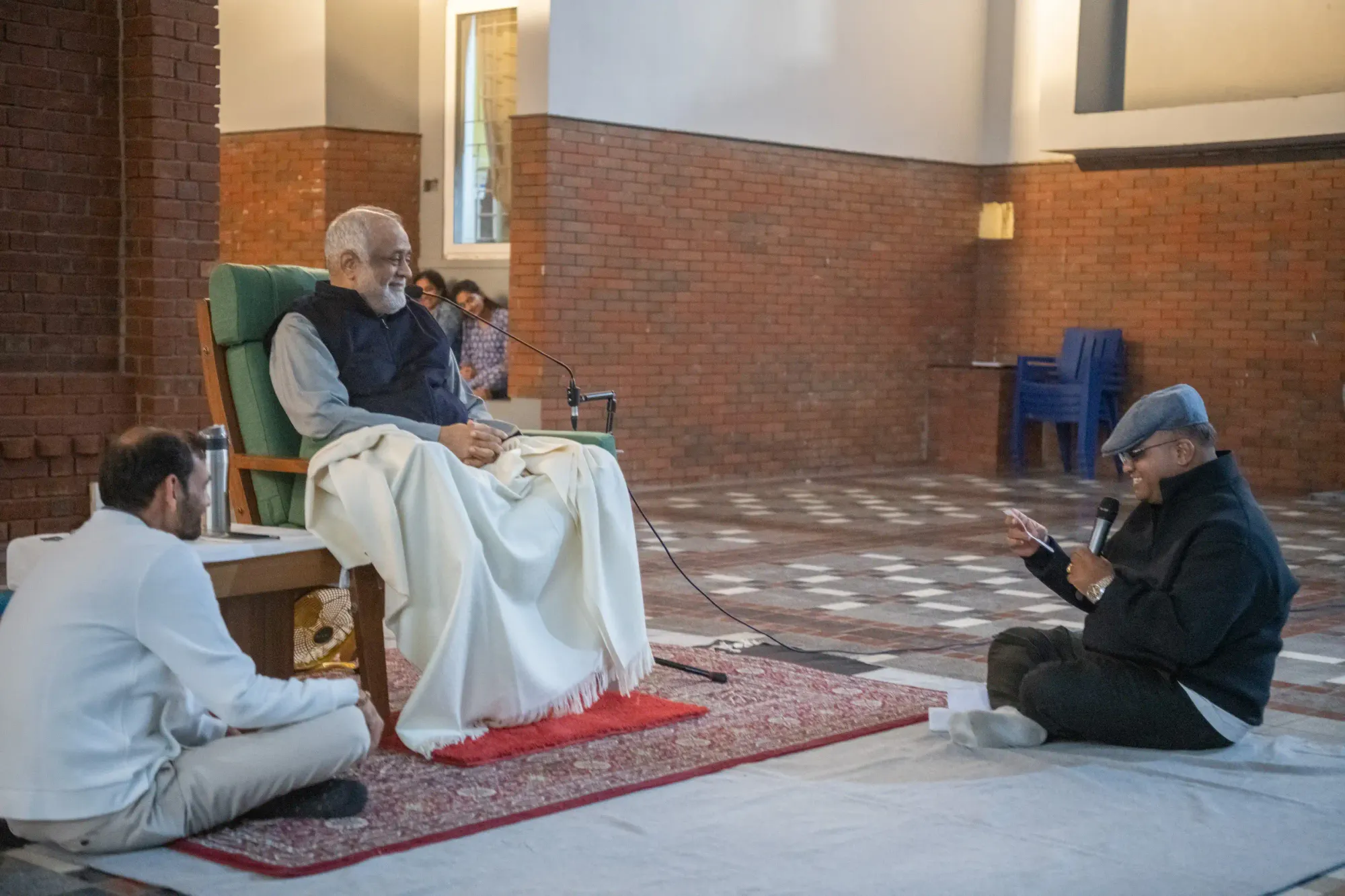
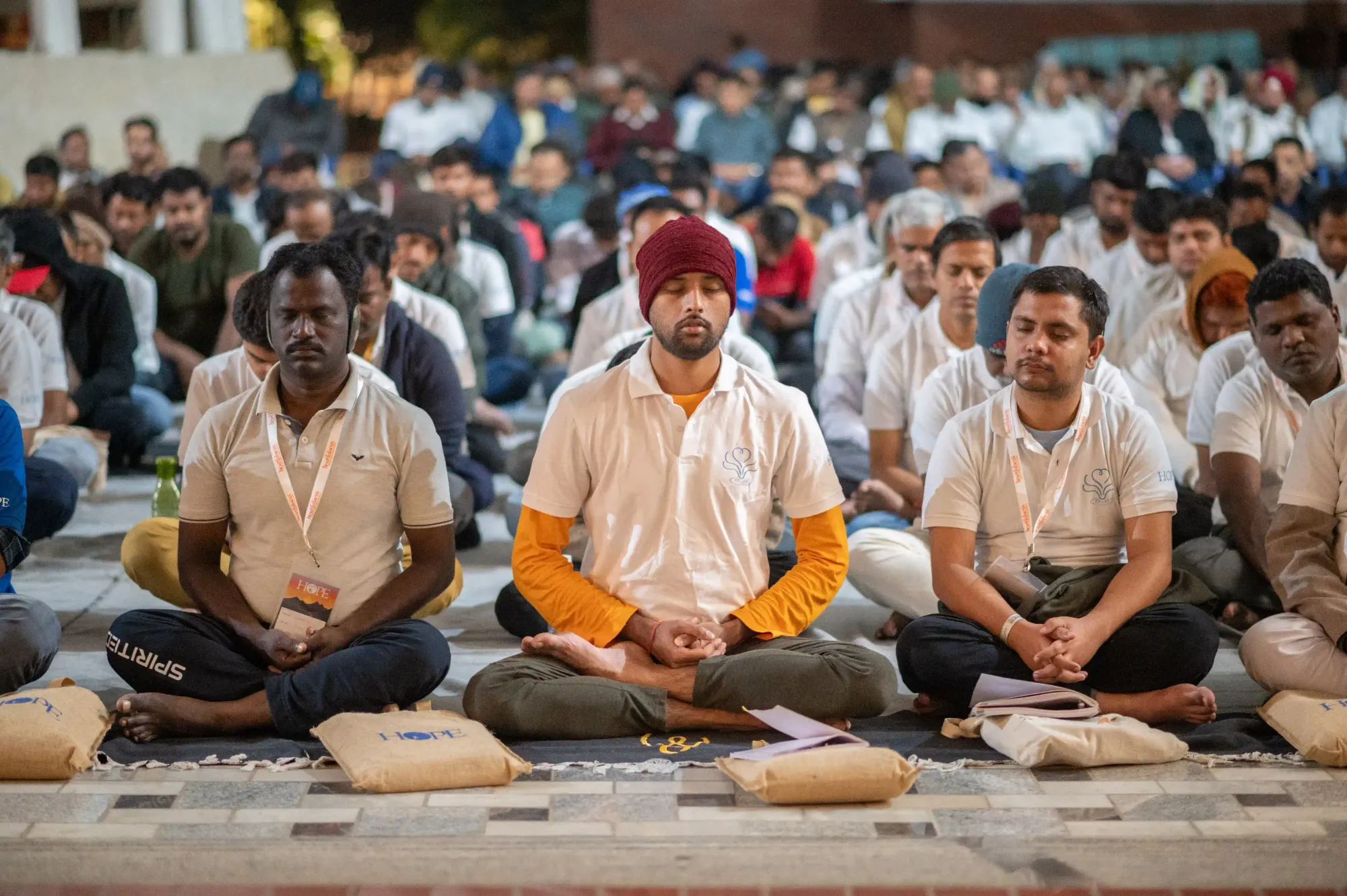
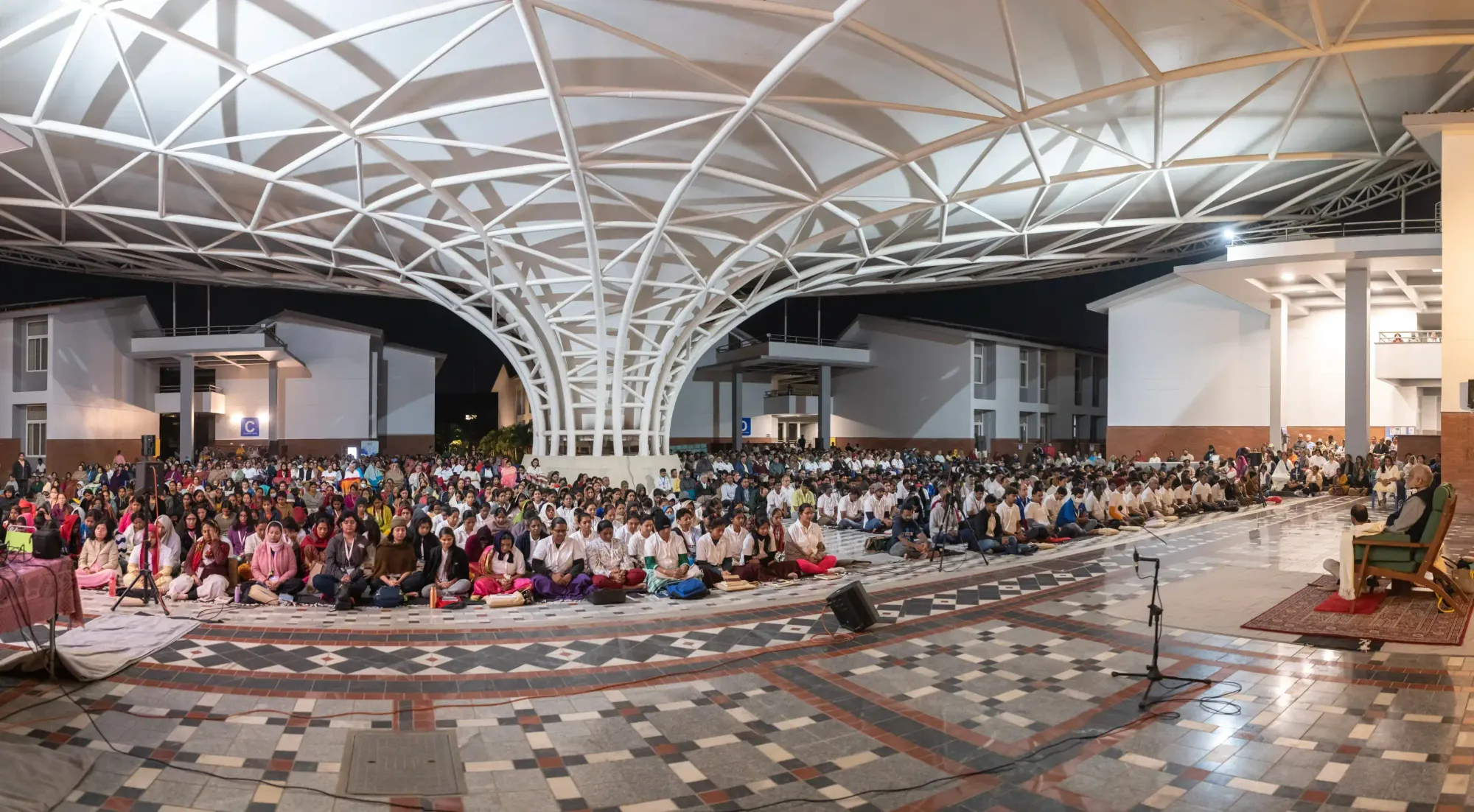
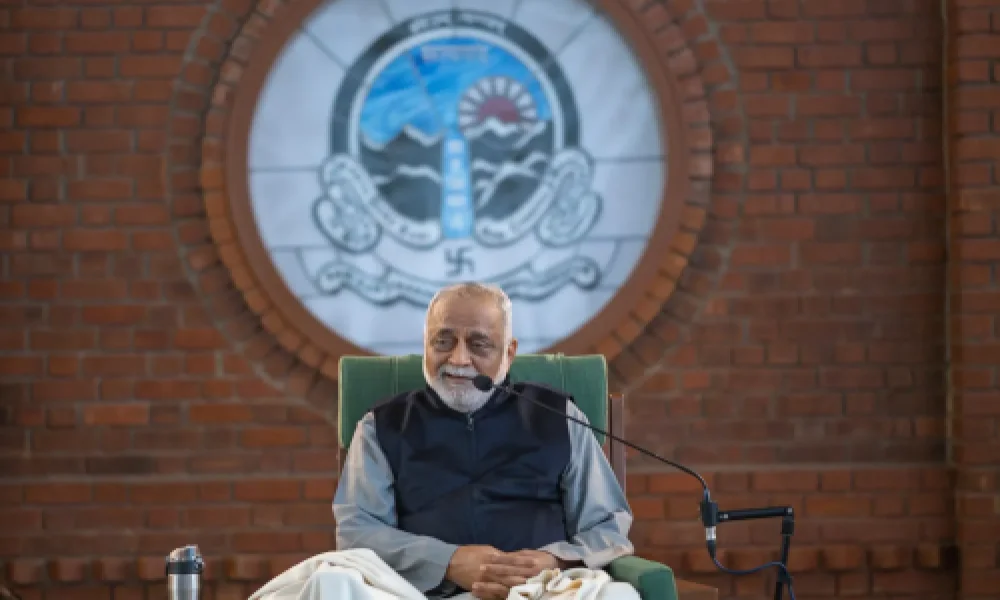
In the night Daaji went to the comfort dorm to meet all the participants from the Hope, FPO & Delhi teacher training programs along with the Kanha residents. The entire place was fully packed and a pin-drop silence prevailed when Daaji arrived. He conducted the meditation session from 8.33 pm to 8.58 pm. He asked Brother Rama Krishna Mallela to speak on the Hope program and then replied to some questions that were collected from the Hope program participants.
To one question on prayer, he replied “Hindi and other language translations of the Sahaj Marg prayer are not up to the mark. When we say the prayer we need to magnify the meaning in our hearts. Then it can be the most appropriate. The words ‘Yet, but..’ should create frustration in our hearts that we are still rather foolish. Despite the knowledge that desires create barriers, I still entertain such things and we must accept that fact. So one must learn to realise that we are fools. And as long as wishes are there, we are stuck. The most understood concept in Sahaj Marg is the samskaras from the past and the present which affect us. But the most misunderstood concept of Sahaj Marg is the samskaras we create now from the future. How can the future create samskaras in me now? The very idea that I'll have my liberation or that I'll become so and so or that I'll get married after five years perhaps is creating the future. Even the idea that maybe I will be liberated after one life or two lives means we are prepared to go through more lives. What if God was willing to give you liberation here and now?
We keep creating our own jail and that is what is creating bars around us. They literally create the future. If they were not there why would you anticipate the future? The future is meaningless once you are content with the here and now. That does not mean I should remain a fool and be satisfied by my foolishness. Is it wrong to have a wish? That is a legitimate question. When I am hungry, I need food. When I am thirsty I need to drink. But if you feel you must have pizza, or must have something else than water, then it is a tragic trajectory. You go on creating a future ad infinitum. So we need to realize the heavy weight of these two words, ‘YET BUT’ which form a part of the prayer of Sahaj Marg.
To the question, how to improve our willpower?
Daaji said, “By using it more and more. It is best to start in increments. It is best to develop it in a practical way one day at a time. Using willpower makes us stronger and stronger. We make resolutions every year or even daily we decide to change ourselves. The more we fumble on our will, the weaker we become. Babuji’s general statement is that when we develop interest then willpower is not required. Do you need willpower to eat ice cream? You may use willpower when you want to avoid eating ice cream. When we like something do we need to use willpower? When you are going on a date with your girlfriend, do you need to tell your mother to remind you of it? You will probably reach there well in advance and wait desperately for her to arrive. At that time we do not need willpower. You are passionately interested in meeting her so you’ll be there come what may. If she is five minutes late you will probably make so many phone calls, right? If you have interest you will do things automatically. Will power then become redundant?”
Q) How to learn the difference between being a witness and an observer?
When you do something deliberately with an intention then it is an act of observation. It is not accidental or coincidental. Witnessing is something you see without any intention. When your intention gets mingled with witnessing then seeing becomes an observation.
But you just pass by anything without any reaction, having no intentions. No reactions mean no likes or no dislikes. Like Lord Krishna says in the Gita, that we must lead our lives in such a way that we do not absorb things just like a lotus leaf does not get affected even if it is in a dirty pond.
Replying to the next question on the concept of samskara and karma in Sahaj Marg, Daaji said that samskaras are the product of karma. When we perform karma with devotion then that karma cannot create samskaras. Whenever we do work in the remembrance of our beloved it does not add any weight to us. Karma can also be at the mental level. Emotionally thinking about something repeatedly will create samskaras. So karma at any level, whether you hate or love, ideologically, emotionally, and thoughtfully will create samskaras. Sometimes it is not just your karma but that of others that can create your destiny for you. We have to be aware of the company we keep. Lord Rama and Sita suffered even though they were a divine couple. But the single act of Kaikeyi made them go through intense suffering. And we cannot do anything about it because doing so will create more samskaras.
Then Daaji carefully explained the effect of cleaning about point B and the meditation on point A. He spoke about a question regarding cleaning which he had asked Babuji Maharaj. In those days a special newsletter called Sahaj Marg Patrika was published which described in one of its issues, the various cleaning techniques of Sahaj Marg. As Daaji happened to be with Babuji Maharaj he felt he could ask him the question directly instead of consulting his preceptor.
Babuji asked him, which cleaning Tarqib (technique) do you use? I told him that I used the technique of cleaning the complexities and impurities visualizing them as smoke getting cleared out from my back. Babuji said, “That is the best one”. Then he told me to do whatever has been prescribed. If in point B cleaning the smoke must be visualized as coming out from the front then do so. Do not ask questions.
He then ended the session saying only Babuji knew why he prescribed these things. If we want to know why such and such a thing has been prescribed then the only way is to do the opposite of it and see what happens to you. That is the only way of knowing no? Practically. Whatever answer you get from somebody else will not convince you. It's like if you ask, “Why should I not take poison?” Well take it and find out!!
With that high note of humor and irony, which conveyed more than lengthy explanations, Daaji called the session to an end and left with many a twinkle and smile that charmed the hearts of those who were listening. Daaji’s heady mix of wit, humor, depth, transmission, grace, joy, wisdom, and solemn stillness can act like a magic potion lifting the spirit high and plunging the heart into a world of peacefulness.