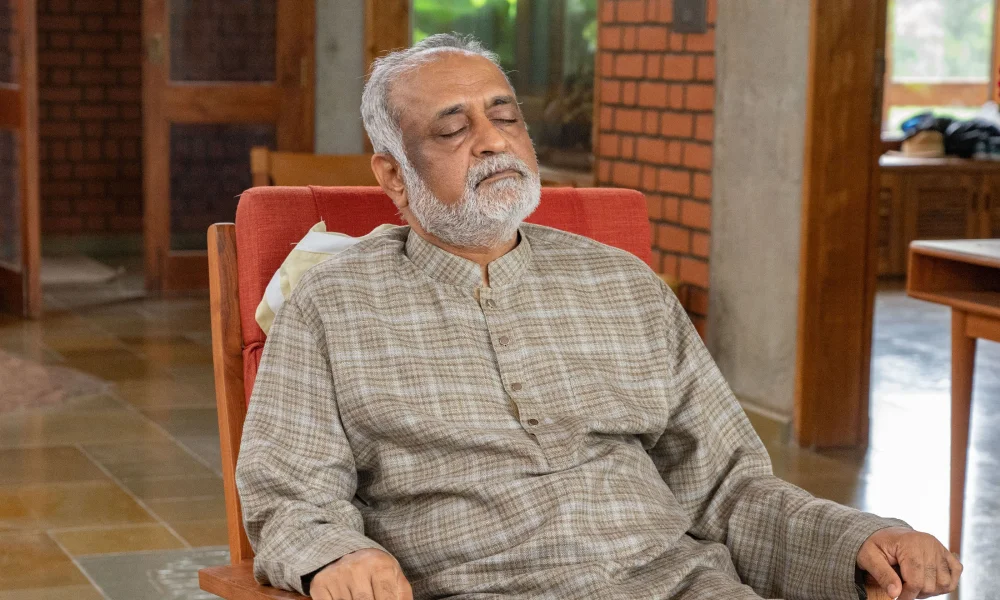
At 11.10 a.m., around twenty students from the THLC hostel met Daaji. They were from classes 9 and 10. Daaji walked them through relaxation and conducted meditation for about half an hour. After meditation, Daaji asked one of the students to read the chapter ‘My Pain’ from Babuji’s Complete Works, Vol. 2.
After reading two paragraphs, Daaji asked the girl to pause for a few seconds and gently nudged the students to think over what Babuji had written. This pattern of reading, followed by silent reflection, continued for some time. He urged the students to cultivate the habit of reading and encouraged them to read this particular book whenever possible.
Later, Daaji took all the students to his office and showed them the interactive courses offered on the Heartfulness website:
https://learning.heartfulness.org/courses/realityinaction
He played one chapter on his computer and then asked them to enroll for the entire course. He urged them to make it a habit to listen to the audios in their hostel for 10 mins every day after the 9 p.m. prayer for universal brotherhood. He also asked them to share their feedback after they had completed the online course.
Around 12 p.m. Stanislas Lajugie and Venkat Sonnathi joined the group. Venkat updated Daaji on the new Heartfulness App.
Daaji showed the baobab seeds to the students and asked them to count the seeds in each packet. He then showed them the images of the huge trees on his computer.
Daaji inquired Stan about his presentation to scientists. In reply to what Stan shared, Daaji said, “It’s a very powerful argument when you say we are neurologically predisposed to negativity for self-defense and self-survival. Do you teach all that?”
Stan clarified the method of learning. To validate the above argument, he said that the audience would be asked a question like: “Suppose out of the ten things that happened to you today, nine were good and one was bad. When you go back home and talk to your family or your friends, which one are you likely to talk about?”
Daaji chuckled, “The bad one, not the good one. The good ones we forget.” The discussion continued on how the mind, in general, is inclined to absorb and retain the negative rather than the positive.
Daaji gave an example, “Suppose your best friend stole your pen. You would remember it all your life!” He emphasized the importance of cleaning to let go of all the impressions.
The discussion continued till 1.15 p.m., and later Daaji invited the entire group for lunch. After lunch, Daaji warmly bid goodbye to the students and retired to his room to rest.