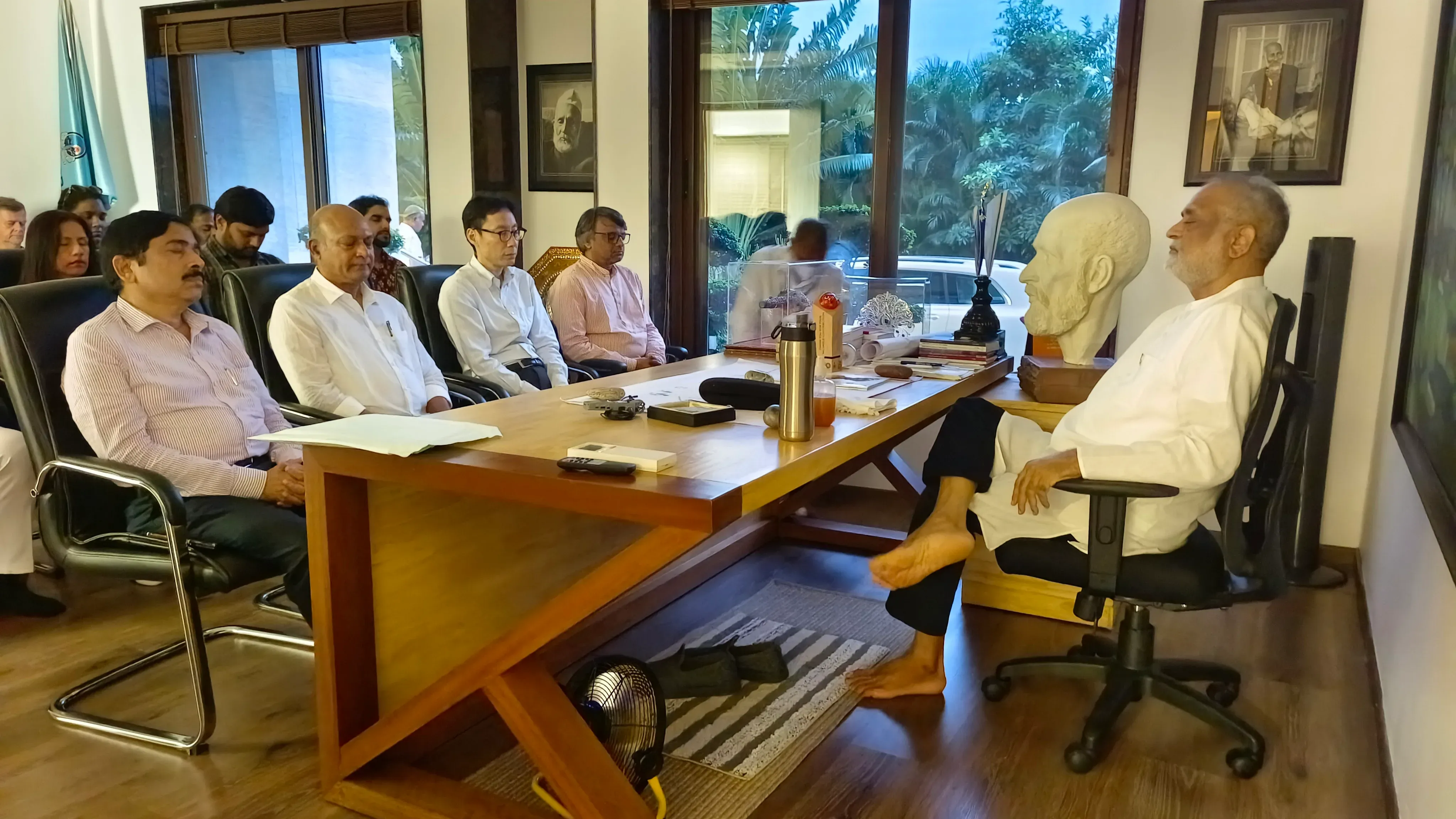
Later, during a discussion with Mulardihar and Ajeyakallam, Daaji shared about his thoughts during the meditation. He said, “During meditation, I had some thoughts taking me back to my professional days. We used to put small stickers on the prescription bottles whenever we dispensed antibiotics like tetracycline – such as, don't take it with milk or don't take it with antacids – because it will not allow it to go into the bloodstream. Almost 80–90% gets precipitated in your stomach and it doesn't reach. So, even though you spent money to get tetracycline, it is ineffective. Likewise, drugs like, what you call, Glycephalvin, you have to take it with butter or fatty substances or sandwiched with cheese and butter. It's the fatty substance that makes this Glycephalvin antibiotic more available. If you don't take it with butter or cheese, it will not get absorbed, hardly 10% will get absorbed. If you drink it with a little butter, a sandwich, and some milk, you will have at least a 90% increase in your bioavailability of these effluents. So, we have to know what not to take and what to take, medicines. The same thing is with yoga. I have to adjust my lifestyle in such a way that I take the full benefit of it. My food habits, my waking and sleeping habits, my thinking and my attitude, they all have to remain in sync with what I do. That's why Patanjali incorporated Yama and Niyama – so as to say, these are the guidelines that you follow, and this will be the result. I was wondering at the science behind yoga with so much of admiration. They put it in very simple Sanskrit slokas (couplet or verses) that people can remember. Such as: himsa, ahimsa, not to be revengeful, not stealing, aparigraha and things like that.”